

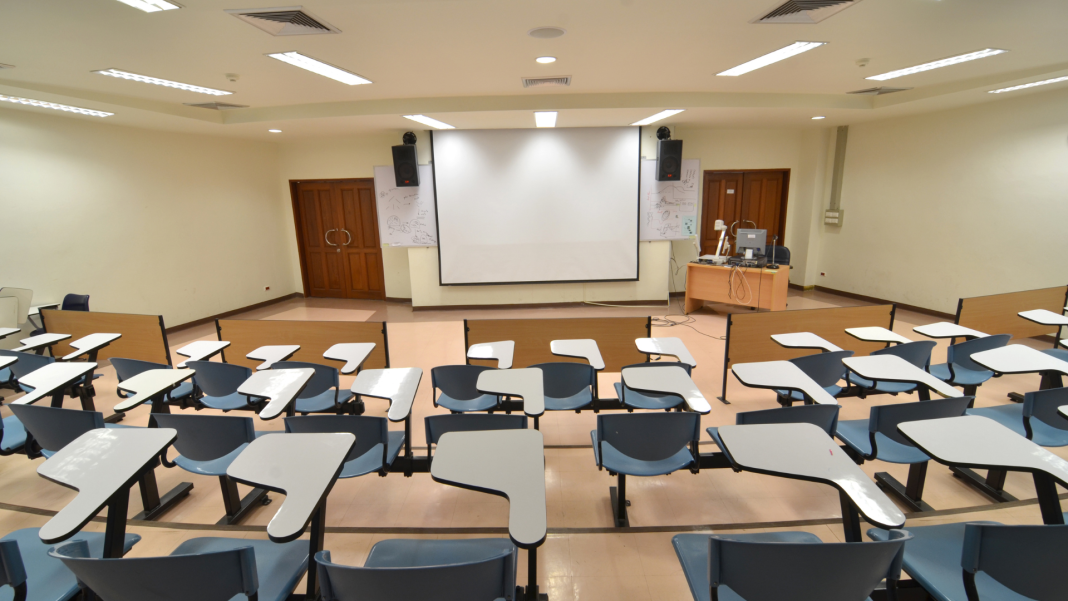

The classroom is a constantly evolving entity. The teacher now has far more resources available to him/her than just books and blackboards. Smart classrooms, which involve technology integrated into the class, are also gaining popularity. But this is more than just incorporating new technology into the class.
Smart Classrooms can aid in helping the students succeed in the increasingly technological world as it leverages new resources and promote an environment conducive to supporting technology. Additionally, it can also help pique the interest and entice the enthusiasm of the students towards education. We shall discuss five crucial tips on how to develop an effective Smart Classroom in this blog post.
5 Tips to Design a Smart Classroom
1. Focus on Flexibility and Accessibility
Both teachers and students would also benefit from the flexibility and openness offered by smart classrooms. Teachers can adapt to different styles and rates with the help of technology. Teaching becomes more engaging than before as a result of the use of interactive whiteboards, virtual reality, and educational software. It is also quite easy for teachers to handle pupils who have special needs.
Such skills can be used by teachers to present knowledge in a manner that is more comprehensible for their pupils through text-to-chart or text-to-animation skills. Finally, smart classroom technology allows teachers to offer their pupils an interactive setting with the ability to adjust their learning pace to one that best suits them.
2. Focus on Smart Classroom Design
Smart classroom design is not a ‘one size fits all’ job. The ideal design depends on the specific needs and learning styles of the students. The following are the three most common smart classroom designs:
- Standard Smart Classroom
This whole teacher-centered orientation is one of the starting points for many schools. It typically includes computers, interactive whiteboards, and projectors. The teacher leads instruction from the front of the room, while technology allows students to interact with the material, the teacher, and their peers.
- Intermediate Smart Classroom
With the addition of a digital podium, laptops, and VR headsets, this is an upgraded setup to the generic classroom setting. Students have separate devices, with technology used in collaborative learning. A balance is found in the level of direct teacher instruction versus independent learning.
- Advanced Smart Classroom
This design is the most student-centered, emphasizing independent learning. Each student has a device, with accompanying software, to create content that allows students to take responsibility for their learning and work independently on topics that interest them. The flipped classroom involves active learning on the part of the student.
3. Move Beyond Traditional Furniture
Encouraging a student-centered approach means creating a flexible classroom. This means going beyond a fixed classroom design. Students can be given different options for where to sit, which enables group formations and classroom movement, as well as finding a learning space that meets their individual needs.
Perhaps tables and chairs with multiple functions and applications can also be incorporated. Maximize this with standing tables and chairs with a higher seating position. The aim is to ensure that a welcoming environment is achieved for all children in class.
4. Ensure Safety and Privacy
With the advent of technology in the educational system, the security of student data assumes utmost importance. In fact, this data has assumed a vital dimension in that it can be hacked by cybercriminals. Moreover, it would be a great task to teach all the individuals involved, including the students and the faculty members, how to protect their data.
5. Use Data and Analytics
Data and analytics also play an important role in smart classrooms. It gives teachers insight into the performance of students in real time. They could also highlight areas that the students may need intensive instruction on and areas where the students perform well. Based on this, the teacher could modify the class instruction according to the needs of the students.
Analytics can also assess the extent to which the whole class is mastering their work, indicating the methodologies and resources used to teach the students. Such continuous feedback will facilitate the teachers’ adjustment to the process of teaching and making sure that, within this highly technological setting, all of the students get an equal opportunity to succeed.
Closing Thoughts
The movement from teaching in class using blackboards to teaching in a smart class is a major paradigm shift in the manner in which we provide our educational offerings. As already indicated, it is not just a matter of investing in the latest technology, but it is more related to how we can make learning more interesting.
Here are five tips that can help educators create smart classrooms that can help increase the engagement levels of their students and help them have a bright and successful life in the years to come. We have moved beyond blackboards and chalk. We need to move towards designing classrooms that can help all our students grow and develop.