

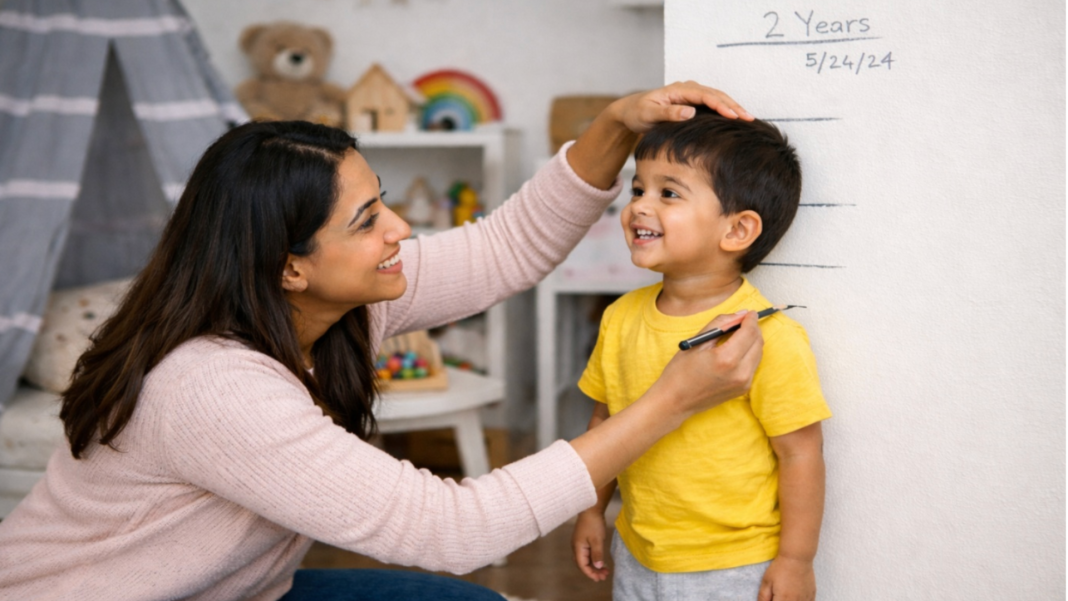

It’s normal to wonder if your toddler’s height is on track, especially around age two when growth patterns start to show more clearly. This stage is a major checkpoint in your child’s development. By now, many kids have doubled their birth length and are building the foundation for how they’ll grow in the coming years.
But when you hear terms like “average height,” it’s easy to feel confused. What does that really mean, and should you be concerned if your child isn’t right at that number?
In this blog, we’ll walk you through what the numbers actually say, why tracking growth matters, and how to understand where your child stands using simple, reliable data. Let’s get started.
What Is the Average Height of a 2-Year-Old?
If you’re wondering whether your 2-year-old is growing well, looking at average height ranges can give you a quick sense. Most 2-year-olds are around 87 cm tall, but there’s a bit of variation depending on gender and other factors.
Boys’ Average Height
At 2 years old, boys typically measure about 87 cm. The World Health Organization (WHO) puts the 50th percentile at 87.1 cm. Other trusted sources show a normal range between 85 to 90 cm. So if your toddler boy falls anywhere in this range, he’s growing just fine.
Girls’ Average Height
For girls, the average height at age 2 is slightly lower which is usually around 85 to 86 cm. WHO charts show 86 cm as the middle mark, with minor differences across populations. Anything within this range is generally considered healthy.
Typical Height Range
Most 2-year-olds fall between 81 and 92 cm. This covers about the 3rd to 97th percentile range. For example, boys may range from 81 to 93.5 cm, and girls from 80 to 92.9 cm. These numbers give you a broad window of what’s considered normal, so don’t panic if your child isn’t exactly 87 cm.
Normal Growth Differences
A few centimetres up or down is completely normal. Things like genetics, diet, sleep, and even region can influence growth. What matters more is the overall trend. If your child consistently grows along their curve, they’re likely on track. But if their height suddenly drops or shoots up compared to past measurements, it’s worth checking in with your paediatrician.
2-Year-Old Height Growth Chart (Percentile Explained)
When doctors measure your child’s height or weight, they often tell you the percentile your child is in. But what does that mean?
A percentile compares your child’s measurement with other children of the same age and gender. For example:
- If your 2-year-old boy is in the 50th percentile for height, that means he’s taller than 50 out of 100 boys his age.
- If your child is in the 90th percentile, only 10 out of 100 kids are taller.
- If they’re in the 10th percentile, 90 out of 100 are taller.
Percentiles are not about being “better” or “worse.” They’re just a way to track growth over time. What’s important is that your child stays on a steady curve. A drop from the 50th to the 10th percentile might be a red flag, while staying at the 10th percentile consistently is usually fine.
Doctors use growth charts from trusted sources like the World Health Organization (WHO) or Indian Academy of Paediatrics (IAP) to plot these percentiles.
Why It Matters
- It helps spot growth problems early
- It tracks patterns, not one-off numbers
- It keeps things personalized, since every child grows at their own pace
If you’re ever unsure about what your child’s percentile means, a quick chat with your paediatrician can clear it up.
Height vs Weight: Why Both Matter Together
When tracking your child’s growth, looking at just their height or only their weight doesn’t give you the full picture. Both height and weight are closely linked, and together, they can tell you whether your child is growing in a healthy, balanced way.
Why Height Alone Doesn’t Tell the Full Story
A child might be tall for their age, but if they weigh too little or too much, it could signal a growth imbalance. For example:
- A tall child with very low weight might not be getting enough nutrients.
- A short child with higher weight could be at risk for early obesity.
Height on its own doesn’t explain whether your child’s body is growing in proportion. That’s why doctors don’t just ask “how tall is your child?” They also ask “how much do they weigh?”
The Importance of Proportional Growth
Proportional growth means your child’s weight is in the right range for their height. This balance is important because:
- Underweight children may have trouble with immunity, energy, and concentration
- Overweight children may be at risk for health concerns like joint issues, early puberty, or diabetes
- Sudden changes in either height or weight could signal a growth concern that needs medical attention
Doctors and paediatricians use both numbers together to make sure your child is growing steadily and proportionally over time.
One of the simplest ways to keep an eye on this balance is by using a height and weight chart for kids. These charts show healthy ranges based on age and gender, and they help you spot trends early. If your child consistently falls within a certain percentile for both height and weight, that’s usually a good sign. But if one drops or rises sharply compared to the other, it might be time to speak with a doctor.
You don’t need to measure every day, but regular tracking every few months can help you feel confident about your child’s overall development.
How Fast Do 2-Year-Olds Grow? (Expected Growth Rate)
By the time your child turns 2, their growth starts to slow down compared to the rapid changes you saw during infancy. But that doesn’t mean they’ve stopped growing. On average, 2-year-olds grow about 7 to 8 cm per year, or roughly 2 to 3 inches.
Annual Height Increase
Between the ages of 2 and puberty, kids typically grow around 5 to 8 cm each year. Most reliable sources, including paediatric growth charts, mention 7 cm per year as a common estimate during the toddler and preschool years. This growth rate applies to both boys and girls, though each child grows at their own pace depending on genetics and health.
Why Growth Slows After Infancy
During the first year, babies can grow up to 25 cm. That’s because their bodies are focused on doubling in size and supporting early brain development. After age 2, growth becomes steadier and more predictable.
At this stage, your child’s body puts more energy into building strength, improving motor skills, and fighting off infections. That’s why you might notice less visible growth but more activity, talking, and coordination.
Growth Spurts Around Age 2
Even with a steady average, 2-year-olds often experience short growth spurts. These can look like a sudden jump of 2 to 4 cm over a few weeks. You might notice signs like:
- Increased hunger
- Fussiness or sleep changes
- Clothes getting tighter or shorter overnight
After the spurt, growth may level off again for a while. These ups and downs are completely normal and help your child stay on their percentile growth curve over time.
Factors That Affect the Height of a 2-Year-Old
Here’s a closer look at the factors that affect the height of a 2-year-old:
1. Genetics and Family Height
Let’s start with the basics. One of the biggest factors that influences your child’s height is genetics. If you and your partner are tall, there’s a good chance your child will grow tall too. On the flip side, if shorter height runs in the family, your child might follow the same path. Genes set the potential, and other factors decide how close your child gets to that.
2. Nutrition (Protein, Calcium, Iron, Vitamin D)
What your child eats matters a lot. A balanced diet packed with proteins, calcium, iron, and vitamin D supports proper growth. These nutrients help bones grow stronger and healthier.
If your 2-year-old is eating well and his diet includes lots of fruits, vegetables, milk, eggs, and cereals, you’re already on the right track. Poor nutrition, especially during these early years, can slow down height gain.
3. Sleep and Physical Activity
Kids grow when they sleep. That’s not just a saying because growth hormone is released when your child is in deep sleep. So, make sure they get 11–14 hours of sleep every day, including naps.
Physical activity is equally important. Let your child run, jump, and play freely. It helps in muscle and bone development, which supports healthy growth.
4. Overall Health and Frequent Illnesses
A healthy child is more likely to grow on track. Frequent infections, untreated illnesses, or chronic medical issues can affect growth.
Things like repeated diarrhoea, asthma, or other health concerns can interfere with nutrient absorption or reduce appetite, leading to slow growth. Regular doctor visits and vaccinations help keep these problems in check.
5. Birth History (Premature or Low Birth Weight)
The start of your child’s life also plays a part. Babies who were born early or with low birth weight may grow a little slower in the first couple of years. However, many of them catch up with the average height by age 2 or a bit later.
It depends on how well they’ve been growing since birth and what kind of care they’ve received along the way.
When Should Parents Be Concerned About Height?
It’s natural to compare your child’s height with others around the same age. However, growth should always be looked at alongside overall health and each developmental milestone for 2 year old children, especially during the early years.
Sometimes, certain patterns may suggest it’s worth checking in with a doctor. Here’s what to watch out for:
- Delayed Growth Milestones: If your child seems much shorter than classmates and hasn’t had a noticeable growth spurt in a long time, that could be a red flag. Most children grow steadily year after year. A noticeable pause or slowdown can be an early sign of an underlying issue.
- Consistently falling percentiles: Height percentiles are a way doctors track your child’s growth over time. If your child was in the 50th percentile at age 2 and drops to the 10th by age 6, that kind of decline should be taken seriously. It may signal a growth delay that needs attention.
- Big Difference from Family Growth Patterns: Genetics usually give a good clue. If both parents are tall and the child is unusually short for their age, or the opposite, it’s worth looking into. While not always a problem, big deviations from expected height based on parental patterns can be a hint that something’s off.
When to Consult a Paediatrician
If you’ve noticed one or more of the points above, don’t panic, but do bring it up with your paediatrician. A doctor can run basic tests to check hormone levels, bone age, and other factors. Early detection helps treat any underlying issues, whether it’s a hormonal imbalance, nutritional deficiency, or genetic condition.
It’s easy to worry when numbers and charts are involved, especially when it’s about your child. But remember, height is just one small part of a much bigger picture. Your child is growing, learning, and becoming their own little person every day.
Trust the journey, focus on healthy habits, and try not to compare too much. And if your instincts ever tell you something isn’t right, consulting a paediatrician can help you get clear answers and peace of mind.