



The API That Citizens Fear to Trust
Technically, incorporating APIs by the government is a daunting challenge. The issue that developers often have to deal with is that they have to connect over fifty state database systems that are based on various architectures, security models, and data standards. However the technical challenge is half the battle. Opposite the user is the reluctant user who is not comfortable linking personal and financial information to government sites which they do not fully trust or comprehend.
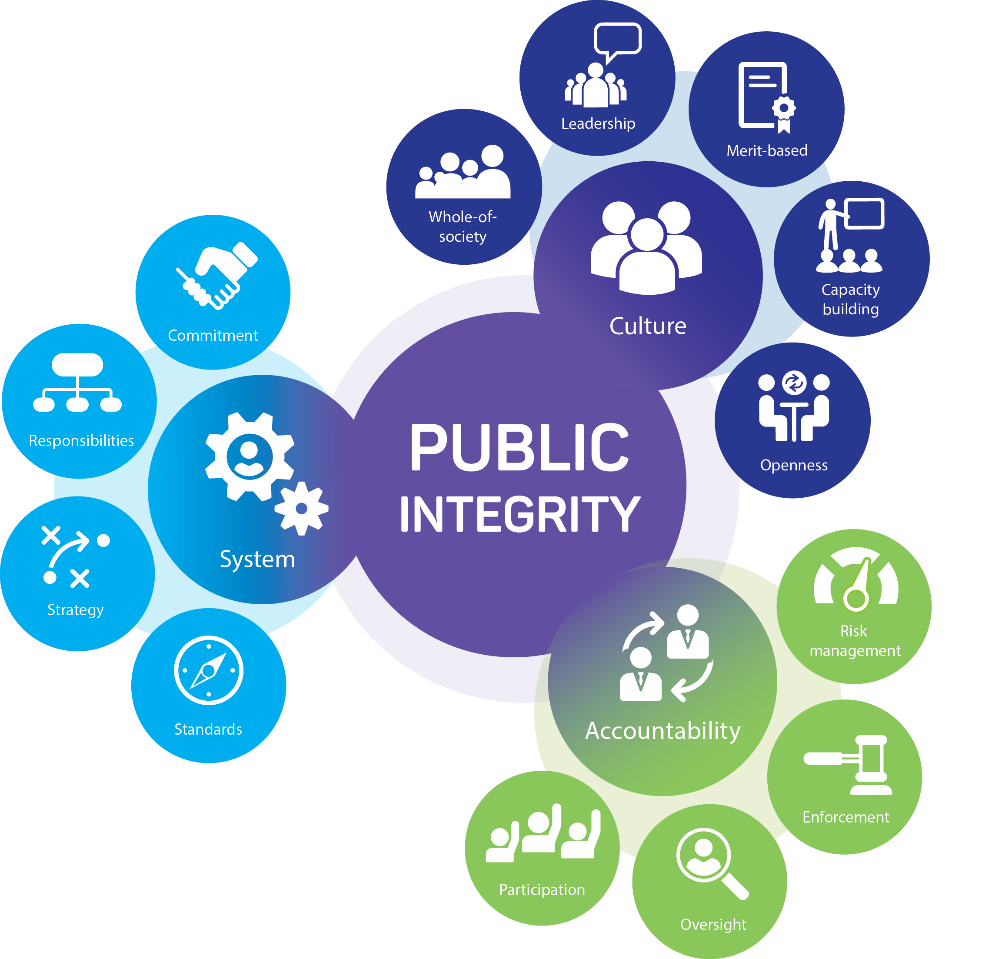
Public integrity emerges from the interaction of culture, systems, and accountability, reinforced through leadership, transparency, and effective oversight.
This poses a two-fold challenge. The engineers have a challenge of resolving deep technical fragmentation besides taking human issues of privacy, surveillance and misuse. Even the well-designed APIs that are secure can fail when users reject authorization. It is important to have knowledge of the overlap between software engineering and behavioral psychology. This article discusses the reinforcing qualities of technical barriers and trust deficits and why neither of the two can be achieved successfully without the other.
The Technical Landscape: 50 States, 50 Different Systems
The API ecosystems of the government are the uneven technological evolution. Oracle database systems of certain states continue to use COBOL-era mainframes with flat file exports, whereas others have REST APIs or old SOAP services. XML, JSON, CSV, and proprietary formats will have to be supported by engineers, in some cases in one integration pipeline.
There is additional complexity with authentication. One jurisdiction can demand OAuth 2.0, another API keys, and another certificate-based identification with IP whitelisting. The rate-limiting policies are diverse, which interferes with real-time workflow.
There is an inconsistency in documentation quality. Newer APIs can provide understandable schemas and test environments, and old systems can offer little guidance. A common problem with teams is that they are forced to reverse-engineer request structure and error handling. This becomes a technical debt that amplifies the cost of development, integration risk, and maintenance cost in the long term in government projects on technology.
Security Architecture and the Psychology of Data Sharing
Government API design is heavily influenced by security requirements which influence user perception. The technical standards of encryption including TLS imposition and certificate validation are vital but users feel secure on the emotional planes and not the analytical ones.
Clear data handling policy, access transparency and audit logging have a strong impact on confidence. This tension is depicted by OAuth consent flows. Developers perceive them as block controls, and users feel they are vulnerable.
There is a lot of anxiety over surveillance among users who are linking financial information to government APIs. This fear lowers participation even in cases where it is unjustified. Digital trust research indicates that the more systems communicate the purpose, duration and protection in a simple manner, the more the user is ready to share data.
The Authentication Paradox: Security vs. User Experience
Strong authentication secures the users but also adds friction. Multi-factor authentication, complicated passwords and re-verification procedures enhance abandonment onboarding. The token expiration might force the re-authentication so that people who otherwise want to do it feel frustrated.
Added steps are psychological burdens. The users start to wonder whether the process was worth the completion. This is what builds the authentication paradox. The systems need to be safe and at the same time useful enough to maintain interest.
Such a platform as ClaimNotify evades such authentication difficulties by adopting security controls that safeguard user information with the lowest level of psychological frustration in the authentication process. Sensible session governance, effective cues of progress, can be a major enhancement to completion without a commensurate decrease in protection.
Data Privacy Regulations Across Jurisdictions
The regulation of privacy also makes integration difficult. At the state level, the laws are more and more similar to GDPR-like frameworks that have their own consent, disclosure, and retention requirements. The challenge is that engineers need to come up with flexible architectures so as to be compliant with various jurisdictions.
The regional storage might be mandated by data residency regulations, whereas privacy-by-default principles restrict the data collection. The consent management should also be dynamic depending on the location and the type of data.
To the user, the lack of consistency in the language of privacy destroys trust. Where there is a wide disparity in the clarity and tone of the consent screens, the user gets confused. Successful API design does not view privacy as a compliance issue, but a stable trust indicator.
Real-Time Integration Challenges and User Expectations
Most of the government database systems were not developed to be accessed in real-time. There are typical latency, batch processing schedules and low concurrency. The engineers frequently make use of caching techniques and which brings trade-offs between freshness and performance.
Users on the other hand demand instant feedback. Delays are commonly taken to mean unreliability. Even brief waits have been found by behavioral research to lower perceived trust. Poor webhook support compels polling architectures, which again adds more latency. Effective communication on processing time is also used to avoid false assumptions of failure due to delays by users.
Building Trust Through Transparency and Technical Design
Trust is enhanced by systems having an explanation. Reliability is reported by API status dashboards. Clarity of the error messages helps in reducing the level of anxiety when the user understands what is going wrong and what should be done by him or her.
Data flow visualization assists users in knowing the information flow and the reasons why. To the developers, transparent documentation creates confidence in long-term stability. Communication with regard to incident response is also essential. Outages are not as detrimental to trust as silence is.
Open source component and external security audits also promotes credibility as these minimize doubt to users and engineers.
The Future of Trustworthy Government Data Integration
The effective integration of government API is not only about good engineering. It requires analyzing the perception of people regarding risk, power, and safety. Low adoption comes with technical excellence without psychological consideration and failure comes with trust-oriented design and inferior infrastructure.
New standards give more and more credit to this balance. It is in the cooperation of engineers, security experts, and behavioral scientists for the future. Government data integration can then be seamless and safe and will truly be trusted when systems are designed to have both machines and brains.